Welcome
Welcome To Community Success Initiative
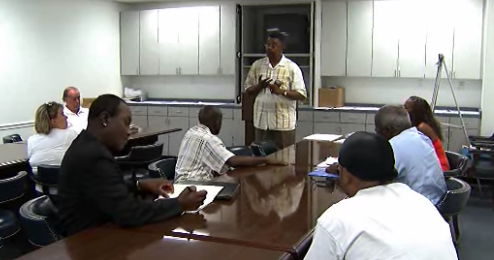
Community Success Initiative (CSI) was founded as a non-profit corporation in May 2004 with a vision to create communities where people discover their potential, set worthy goals for their lives, and take action in a positive way, with an emphasis on men and women who are transitioning from prison and jail, or who otherwise find themselves entangled in the criminal justice system.
Our Focus
-
Helping formerly incarcerated persons get back on their feet.
-
Reducing crime in the community.
Two minute video overview of Community Success Initiative
Great news, everyone: Ex-felons about to get Obamacare!
"Newly freed prisoners traditionally walk away from the penitentiary with a bus ticket and a few dollars in their pockets. Starting in January, many of the 650,000 inmates released from prison each year will be eligible for something else: health care by way of Medicaid, thanks to the Affordable Care Act." Click to read the entire article at PewStates.org.
Join Us on the 27th of June for Community Success Initiative's 9th Anniversary & Second Chance Campaign Kickoff!
When? Thursday June 27, 2013 12:00 noon – 2:30pm
Where? Martin Street Baptist Church Family Life Center 1005 East Martin Street, Raleigh, NC
We Celebrate this 9th Anniversary with a luncheon and The Second Chance Campaign Kickoff. The lunch is free, but we ask for your financial support for this work. Please RSVP by calling us at (919) 834‐7626 x 11 or by email at inquiry@communitysucccess.org
Unable to Attend? You May Donate at: http://bit.ly/CSIdonate You may download this pdf for the full anouncement Second Chance Campaign
Proposed Bill 5 year Waiting for felons to vote in North Carolina
The bill’s primary sponsor, North Carolina Republican Senator E.S. “Buck” Newton of Wilson, said he considers the measure a compromise. “The long and short of it is the vast majority of people I have spoken to regarding election laws think convicted felons should not be able to vote at all,” said Newton, a Republican who represents Wilson, Nash and Johnston counties. “I think a person can make a mistake, get their lives together and show themselves to be upstanding citizens. A five-year time frame is a reasonable period to show that.”
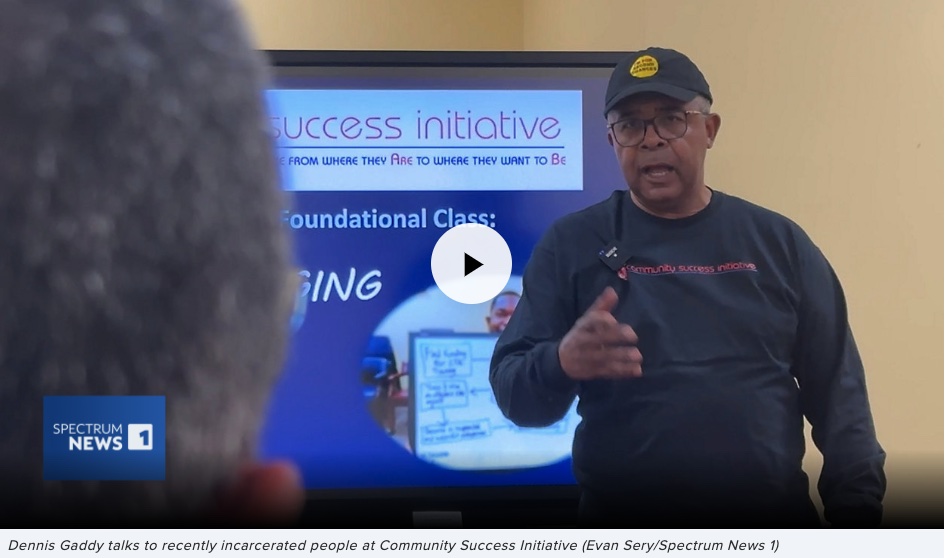
“This is essentially voter suppression for African American males who have been most disproportionately impacted by and entangled in the criminal justice system,” said Dennis Gaddy, director of the Community Success Initiative, a Raleigh-based nonprofit that advocates on behalf of ex-offenders at the General Assembly. “Taking away the vote from the formerly incarcerated has never been designed as a punitive measure, but as a way to suppress the vote.”
For the article at the Raleigh News and Observer regarding North Carolina Senate Bill 721
To see the content of North Carolina Senate Bill 721 bill.
To see the sponsors of North Carolina Senate Bill 721 bill.
SECOND CHANCE ALLIANCE: Speak Out Against Felony Disenfranchisement to Preserve Our Voice
Many of us have criminal records and confront these barriers directly. Others of us have witnessed family members and neighbors struggle against these barriers. Others come to the Alliance as service providers and advocates. From these diverse backgrounds, we have joined together and with one collective voice to say, “I’m for Second Chances!” Click to read the Second Chance Alliance piece.
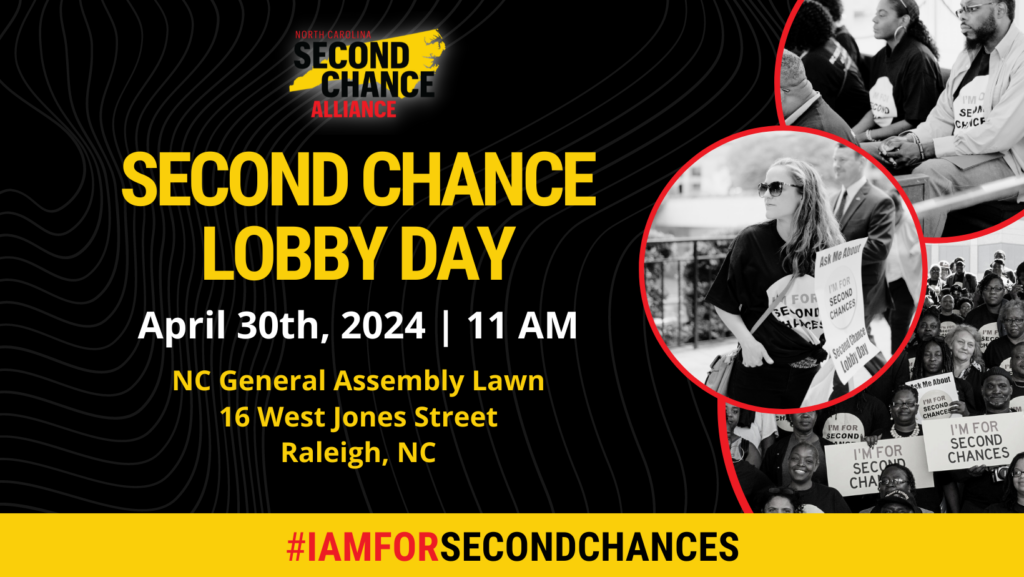
Second Chance Lobby Day II -- NC Legislature April 23, 2013
Click for details to Second Chance Lobby Day II!
For talking points when meeting with North Carolina legislators on Second Chance Lobby Day. Click this link to N.C. Justice.org for the single page PDF file.
Our 1st PNC Bank/CSI Financial Management class.
Photo of our 1st PNC Bank/CSI Financial Management class on April 22nd 2013, with Diana Benthall, PNC Branch Manager, Ashton Square, Raleigh, NC (and CSI's Banker)
Our NAACP - HKonJ page
Click to view our new NAACP - HKonJ webpage.
Dennis Gaddy interview with NC Policy Watch Chris Fitzsimon
Dennis Gaddy discusses Second Chances and helping formerly incarcerated people get back on their feet during an interview with NC Policy Watch Chris Fitzsimon. Click on the player arrow button below to play the podcast, or click for a direct link to the interview.
Imagine
Imagine the following: One in five of the men you knew had a prison record. Members of your race were six times more likely to be incarcerated than those of the majority race. Those incarcerated had a much harder time working, marrying, and parenting their children. Their children were in turn more likely to commit crime and more likely to be incarcerated as a result. These imaginings describe reality in our poorest African American communities. Click to read more by downloading a PDF file study by Joseph E. Kennedy, who is
a Professor of Law at the University of North Carolina at Chapel Hill
where he teaches Criminal Law.
Blacks Are Singled Out for Marijuana Arrests, Federal Data Suggests
Black Americans were nearly four times as likely as whites to be arrested on charges of marijuana possession in 2010, even though the two groups used the drug at similar rates, according to new federal data.
Read the article at nytimes.com.
A report by the National Minority AIDS Council and Housing Works, with support from the Ford Foundation
"Over the past three decades in the United States, overlapping epidemics of mass incarceration and HIV/AIDS have become disproportionately concentrated among economically disadvantaged persons of color. As a result, a substantial proportion of people living with HIV in the U.S. have spent time in prison or jail, including many with co-occurring substance use and mental health disorders that complicate care and contribute to social marginalization. Each year, some 150,000 Americans living with HIV/AIDS are released from a correctional facility.' Click to read the findings of the National Minority AIDS Council and Housing Works.
NPR series on the effects of incarceration
There are roughly half a million people behind bars for nonviolent drug crimes in America. But no one really knows how many people have been sentenced to long prison bids since the laws known as Rockefeller drug laws first passed 40 years ago. What's clear is that tough sentencing laws, even for low-level drug dealers and addicts, shaped a generation of young men, especially black and Hispanic men.
Click to review the personal stories of the lasting effects of incarceration.
Harvard Magazine article "The Prison Problem"
“Small race and class differences in offending are amplified at each stage of criminal processing, from arrest through conviction and sentencing,” Western writes. A criminal history accumulates that reflects not just criminal conduct, but the influence of race and poverty, and this in turn shapes later decisions about sentencing and parole release." Click to read the full article. A follow-up article is here.
News And Observer Op-Ed piece on "Filling The Cells"
Written by Mr. Gene Nichol, the Boyd Tinsley distinguished professor at UNC’s Law School and director of the UNC Center on Poverty, Work & Opportunity, he cites the statistics of incarceration, and the racial disparity in sentencing, as they are in North Carolina. Click to read this piece.
Nonviolent offenders helped by new law
At the CharlotteOberver.com Posted: Monday, Dec. 03, 2012. A new N.C. law went into effect Saturday that you might not be aware of. The law allows for the expunction – as in removal – of first-time nonviolent felonies or nonviolent misdemeanors after 15 years from the records of persons who have completed their sentences and exhibited good moral character or behavior during those 15 years. Click to read the story, and to view the video news report on wsoctv.com.
Followup to the NAACP delegation to Geneva
Click here to visit the NAACP webpage that describes the United Nations Human Rights Council regarding voting rights in the US. meeting and some highlights of the event. Click to view a pictorial of the NC NAACP 69th Conference.
Latest edition CSI newsletter
"The Hope Line" for January, February and March of 2013 -- click this link here to read it. Our Hopeline Archives are here.
COLLATERAL CONSEQUENCES ASSESSMENT TOOL (C-CAT)
This new online guide, written by faculty member John Rubin, explains in one place the mechanisms available in North Carolina for obtaining relief from a criminal conviction, including expunctions, certificates of relief, and petitions to restore rights or eliminate restrictions. The guide is available at no charge. Visit www.sog.unc.edu/node/2588. Click to read For collateral consequences assessments in other states.
New York Times editorial: How to cut prison costs
Thanks in part to the federal Second Chance Act of 2008, states are finding creative ways to cut prison costs — now more than $52 billion a year nationwide — by making sure that people who are released from prison actually stay out. Click to read the NY Times article.
The NC Second Chance Alliance
...is a statewide alliance of advocacy organizations, service providers, faith-based organizations, community leaders and interested citizens that have come together to achieve the safe and successful reintegration of adults and juveniles with criminal records by promoting policies that remove barriers to productive citizenship. Click to visit their website.
Instructions for Petition and Order of Certificate of Relief. Under G.S. 15-A-173. Form AOC-CR-273. Click for a pdf copy of the petition.
To Build a Better Criminal Justice System
In a new publication of The Sentencing Project 25 leading scholars and practitioners have contributed essays on their strategic vision for the next 25 years of criminal justice reform. Issues addressed in the collection include racial justice strategies, linking public health and criminal justice reform, challenging the war on drugs, and the viability of fiscal pressures as a focus for reform. Click to read this valuable report.
Latest addition to CSI programs - CSI Legal Services Project
Community Success Initiative is piloting a direct legal services initiative to formerly incarcerated men and women or those currently entangled in the criminal justice system. We will work to provide legal remedies such as securing a driver’s license, obtaining certificates of relief, creating and/or modifying child support orders, and occupational licenses. Click to read about this important project.
Notice to the blind and visually impaired.
We are trying to be 100% in compliance with the Disabilities Act. If you experience any problem with our website or any of our links, please email us at mailto:inquiry@communitysuccess.org Thank you for your feedback.
U.S. Equal Employment Opportunity Commission (EEOC) new rules regarding the hiring of the formerly incarcerated.
The U.S. Equal Employment Opportunity Commission voted to pass updated guidelines on the hiring of individuals with criminal records. The updated guidance provides employers with greater clarity on the fair use of background checks, in order to help the vast majority of employers who are often unaware of federal civil rights laws and how criminal record based discrimination can serve as a surrogate for race based discrimination. The guidance will also go a long way to educate jobseekers with criminal records who face tremendous challenges in navigating the expanded use of criminal background checks for employment in today’s competitive job market. Click to read about the changes.
Click for our ban-the-box page.
Reducing Employment Barriers for People with Arrest Records and Convictions - National Employment Law Project (NELP).
Please check out this powerful Power Point presentation from Michelle Natividad Rodriguez, National Employment Law Project, that addresses reducing employment barriers for people with arrests and convictions. Please click for the presentation and for the NELP homepage
Michelle Alexander, Author of "The New Jim Crow - Mass Incarceration in the Age of Colorblindness", addresses the devastating impact that the mass incarceration of Black men is having on communities.
Melissa Harris-Perry and her panelists talk about where politics and the prison system converge in deciding who gets to vote, and the outcomes of the decision. Click to view the media link.
Visit NBCNews.com for breaking news, world news, and news about the economy
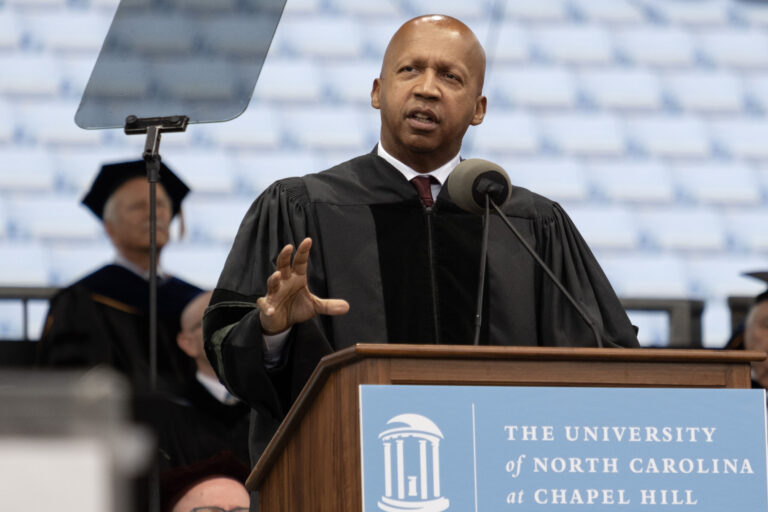
Bryan Stevenson: Ending the Politics of Fear and Anger
... and click to visit the Equal Justice Initiative, where various issues such as the death penalty, Incarceration of youth in adult prisons, sentencing reform, race and poverty are discussed.
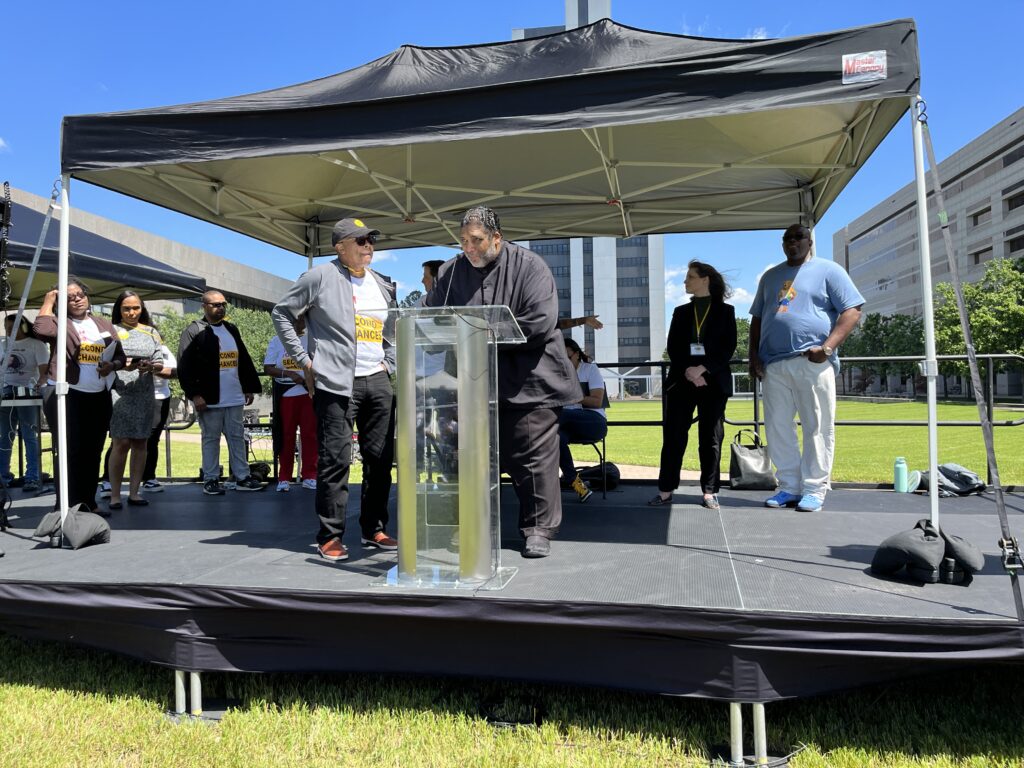
Second Chance Lobby Day a Success!
-
Click to read about The Second Chance Lobby Day.
-
Click for Second Chance Lobby Day NC Legislature video highlights!
-
Click for Second Chance Lobby Day Press Conference.
Please see below a variety of CSI topics of interest:
-
For Reentry Issues and Resources
-
For Needs and Assessment Form
-
For Wake County Human Resource Guide-2012
-
To read a stirring testimonial
-
For the CSI two page brochure
-
For directions to CSI
-
For the CSI Legal Services Project click here
Contributing is easy!
Your generosity helps to continue the work of Community Success Initiative. You can use your debit or credit card to make a tax-deductible donation today!